
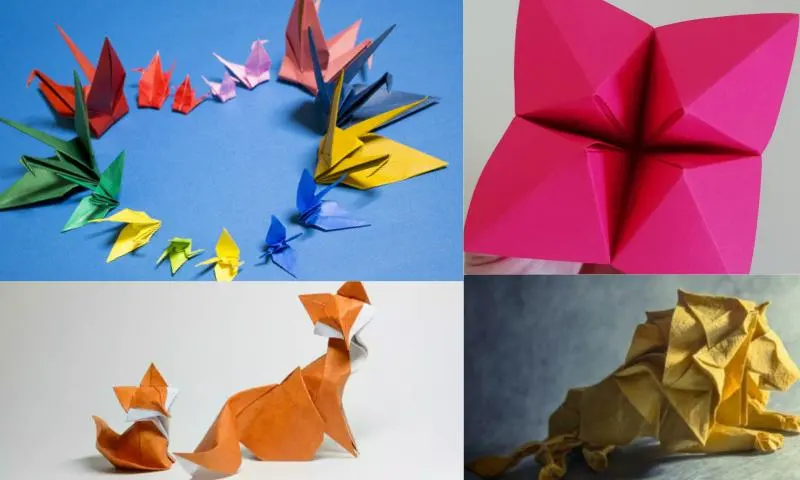
Introduction to Origami: The Art of Paper
Origami is a paper-folding art of Japanese origin. Etymologically, it consists of the words "ori" (to fold) and "gami" (paper). Traditionally, origami aims to create various shapes by simply folding paper without additional processes such as cutting, gluing, or marking. Beyond being just a hobby, this art has found applications in different fields such as mathematics, engineering, and design. In this document, you will find the basic principles of origami, simple projects for beginners, and tips for mastering this art. The worldwide popularity and cultural significance of origami will also be highlighted. Through examples such as the use of origami crane as a symbol of peace, the deep meanings and cultural impacts of origami will also be examined. For information on this subject and to ask your questions, you can visit the relevant online companies on web pages and review them in detail from here.
Simple Origami Projects for Beginners
It is best for beginners in origami to start with basic figures. Simple models such as birds, fish, boats, and hats are perfect for learning basic folding techniques. Here are step-by-step instructions and visual guides for some of these models:
- Bird: Cut the paper into a square. Create the basic shape using valley and mountain folds. Complete the bird by shaping the wings and head.
- Fish: Fold the paper in half and create a basic triangle. Form the fish's tail and fins by folding the edges of the triangle inward.
- Boat: Fold the paper in half and create a rectangle. Fold the bottom corners of the rectangle upwards to obtain a hat shape. Turn it into a boat by opening the edges of the hat.
- Hat: Fold the paper in half and create a rectangle. Fold the bottom corners of the rectangle upwards to obtain a hat shape. You can use glue to secure the edges.
Papers of 15x15 cm size are ideal for these projects. Points to consider during folding include that the folds should be neat and symmetrical. To avoid common mistakes, follow each step carefully and do not rush. Beginner origami kits and resources can make these projects easier and more enjoyable.
Origami Tips and Tricks
Some tools can be used in origami to facilitate the folding process and achieve more precise results. A bone folder is used to fold the paper neatly and create sharp lines. A ruler and scissors can help cut the paper to the correct dimensions and assist during folding. Learning advanced folding techniques is important for more complex models. These techniques include methods such as reverse fold, sink fold, and squash fold. The choice of origami paper is also important. Factors such as color, pattern, and thickness can affect the appearance and durability of the final product. For more complex projects, thicker and more durable papers should be preferred. Methods for displaying and storing your origami projects are also important. Keeping models away from direct sunlight and protecting them from dust can extend their lifespan. Origami artists and resources can be researched for inspiration. The works of famous origami artists such as Akira Yoshizawa, Robert J. Lang, and Tomoko Fuse are a great source for learning new ideas and techniques. Joining origami communities and communicating with other origami enthusiasts can increase your motivation and enable you to learn new things. Origami museums, origami festivals, and online forums offer great opportunities to join such communities. For example, the Origami Museum in Japan exhibits origami works from all over the world. You can also exchange information about origami and share your projects in online forums and social media groups.