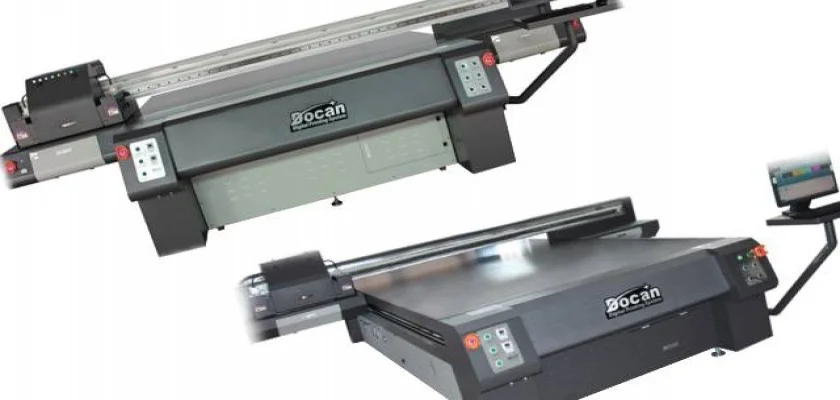
What to Know About UV Printers
UV printers and machines are quite similar to classic printers in terms of their work and operating principles. Accordingly, while classic printers print on flexible materials such as paper transferred onto a drum, flatbed printers can print most effectively on hard materials like wood, glass, flex, and metal. The features of these printer models provide usage areas in many sectors such as advertising, furniture, metal industry, printing, and promotional sectors. Some examples of printing jobs that can be done with these printer models are generally as follows: Printing images and text on signs, on wood, particleboard, sheet metal, glass, bank cards, bottles, glasses, etc., on porcelain plates, on diaries, keychains, and other desired areas. Basic types of printing printer machines are generally of two different types: standard solvent and ultra violet. In flatbed printing machines within UV printing systems, there is a light source system that applies ultra violet light over all printing systems that are applied according to their values and additionally.What are the Advantages of Printing Printers?
These light systems are applied to UV ink, increasing the resistance of all printed materials to sunlight and also effectively preventing fading for approximately 5 years. For this reason, using a UV printer for printing jobs to be used outdoors is more advantageous than solvent printers. They can print at very high speeds, delivering desired jobs in a short time, and also increasing production capacities to high levels quickly and most effectively. Nowadays, different systems exist, and they do not obscure or cause any problems with ink adhesion on perforated materials. When the costs of UV printers and machines are compared, they present themselves as a very economical solution. One of the reasons for their widespread use in these stages is their affordability.