Netting and Wire Fencing Installation Around the Field
After the main structure and ironworks of the planned indoor field are completed, the process of covering it with a tarp begins. A specially manufactured, high-quality, and durable tarp is used. The tarp is made using polyester high-tenacity technical industrial yarn, utilizing a 1100 Dtexs fabric type. Weighing 650gr per square meter, the tarp is resistant to heat and cold. This highly durable fabric does not wear out under UV radiation.
During the installation of wire fencing around the field, specially produced hot-dip galvanized PVC-coated chain-link fencing is used. For the construction of an indoor artificial turf field, the perimeter is enclosed with wire mesh to a height of 4 meters from the inside. This wire, with a thickness of 3.6mm, is installed with a mesh opening of 50mm. The wire mesh is stretched around the field and secured. Steel ropes, 4mm in diameter, are stretched in four rows along the goal lines and the long sides of the field. The ropes are tightened using clamps and fastened together.
Nets made from 100% polyamide yarn are used for the goal lines (number 120) and the field area (number 66).Features and Installation of Artificial Turf
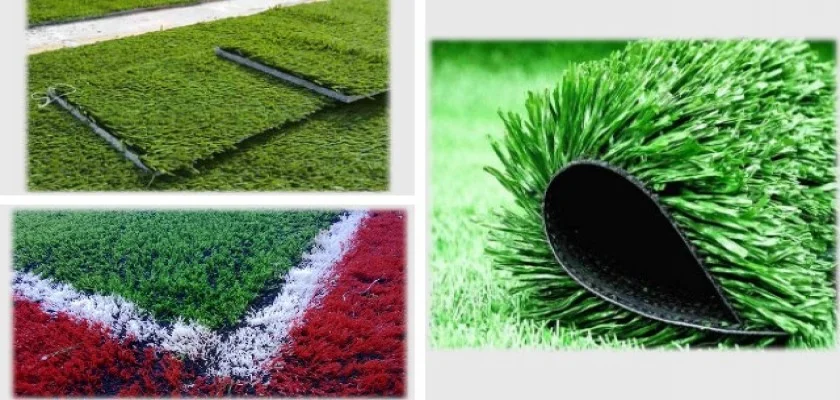
Synthetic turf, which has the same characteristics as natural grass in terms of use and appearance, is now used in all official and international competitions after being manufactured with rubber granule infill and polyurethane yarn. Artificial turf offers greater convenience compared to natural grass and is used in many areas, including football fields, basketball and volleyball courts, tennis courts, the subflooring for indoor artificial turf fields, running tracks, walking paths, and special parks.
In accordance with the specifications of the Provincial Directorate of Youth, a 55mm synthetic turf is applied to the field surface. Certified by FIFA laboratories with an IP report, this turf lasts longer than natural grass. Due to its perforations and water permeability, it dries faster. Suitable for all weather conditions, it eliminates the risk of injuries from slipping for athletes. Furthermore, it does not incur watering and maintenance costs like natural grass.www.sosy.com.tr