
What are the Differences Between Carbon Black Types?
How is Carbon Black Quality Measured?
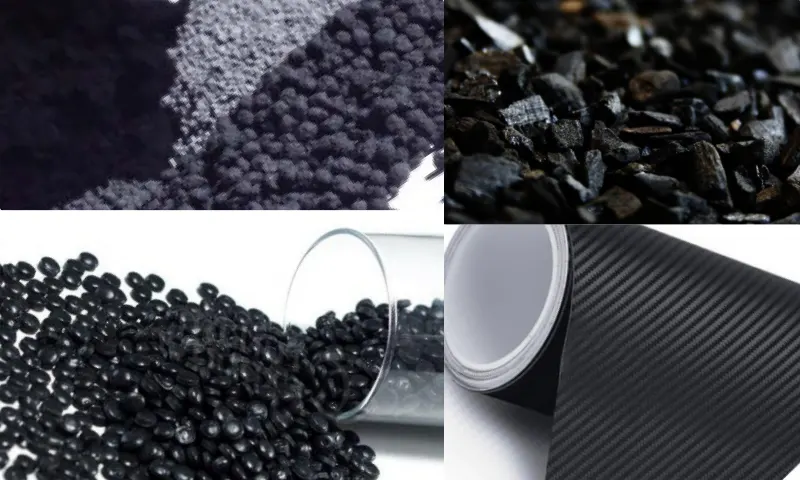
Carbon Black types vary according to their production method, particle size, and surface structure. The most well-known types include Furnace Black, Channel Black, Thermal Black, and Acetylene Black. Carbon Black produced by the Furnace Black method is preferred in the rubber industry to provide durability. Channel Black, on the other hand, stands out in pigment applications due to its finer particle structure. Thermal Black, with its large particles, provides better dispersion in soft rubber compounds. Acetylene Black is used in batteries and electronic products due to its high electrical conductivity. The differences between these types arise not only from their chemical structure but also from their surface activity. You can visit the web address https://quadrokimya.com/urunlerimiz/karbon-siyahi/ for detailed information about Carbon Black.
Does Carbon Black Usage Harm the Environment?
The quality of Carbon Black is a factor that directly determines the product's performance. Surface area, particle size, structure density, volatile matter content, and color saturation are the main criteria for quality measurement. In laboratory analyses, the activity of particles is calculated by measuring the BET surface area. The higher this value, the better reinforcing effect Carbon Black provides. In tests conducted in the rubber industry, results such as tensile strength, hardness, and elasticity are evaluated. High-quality Carbon Black disperses homogeneously within the mixture and offers long-term mechanical durability. The environmental impacts during Carbon Black production vary depending on the technology used. In modern facilities, combustion gases are filtered, and energy recovery is achieved. This minimizes emissions during the production process. As Carbon Black is a chemically stable substance, it does not directly harm the environment during its use. If proper waste management is applied, the carbon footprint can be significantly reduced. Waste Carbon Black can be made reusable through recycling systems. As sustainable production methods become more widespread in the industry, environmentally friendly applications are increasing.